

Affordable Medical Supplies for Children: 2026 Guide
Table of Contents
- What Makes Medical Supplies for Children Affordable in Canada
- The Real Cost of Pediatric Medical Equipment
- How to Compare Prices Without Sacrificing Quality
- Assistive Devices Program Coverage for Pediatric Patients
- Pediatric Medical Equipment Grants and Funding Options
- Managing Ostomy Supplies on a Budget
- Affordable G-Tube and Ostomy Accessories That Actually Last
- How to Build a Cost-Effective Supply Routine
- Frequently Asked Questions
Last Updated: September 17, 2026
What Makes Medical Supplies for Children Affordable in Canada
Affordable medical supplies for children come down to three levels: what provincial programs cover, what you buy out of pocket, and how long each item lasts. This guide from Special Stitches walks through each level so you can cut costs without cutting quality.
The math is unforgiving for families managing a feeding tube or an ostomy.
The Real Cost of Pediatric Medical Equipment
The true cost of pediatric equipment is not the sticker price. It's the sticker price multiplied by how often you replace it, minus whatever gets reimbursed.
How to Compare Prices Without Sacrificing Quality
Compare pediatric medical supplies on cost per month of use, not cost per unit. A $35 syringe holder that lasts 12 months costs about $3 a month. A $12 version that lasts three months costs $4.
Three checks before you buy:
- Fabric and construction: Waterproof lining and reinforced seams survive repeated washing.
- Replacement policy: Made-to-order items should match your child's specific tube setup.
- Local shipping: Domestic orders avoid cross-border fees and long waits.
Assistive Devices Program Coverage for Pediatric Patients
The Assistive Devices Program (ADP) is a provincial funding program that helps pay for certain assistive devices for eligible residents. Coverage rules, eligible devices, and the application process vary by province, so confirm current details directly with your provincial program before you buy.
Pediatric Medical Equipment Grants and Funding Options
Pediatric equipment grants fill the gaps that provincial programs leave. Charitable organizations, hospital foundations, and condition-specific associations commonly offer grants for children's medical equipment. The trick most parents miss is that these funding streams are not mutually exclusive, they stack, and the order you pursue them in changes how much you recover.
How to Stack Funding Sources Without Losing Eligibility
Think of pediatric funding as three layers that sit on top of each other:
- Provincial assistive device programs pay first, because most charitable grants ask what the province has already committed. Get your provincial assessment or denial in writing before you apply anywhere else.
- Charitable and condition-specific grants cover what the province declines. Many funders will only consider the residual cost, so a documented provincial decision is often a prerequisite, not an optional attachment.
- Tax measures recover a portion of whatever you still paid out of pocket. The medical expense tax credit is claimed at filing time, so it is the last layer, not a substitute for the first two.
Most grant applications ask for the same core documents:
- A letter from your child's clinician confirming medical necessity
- A quote or invoice for the specific equipment
- Proof of residency and, for some programs, income verification
- Documentation of any provincial funding decision, approval or denial
Provincial vs. Federal Funding: What Parents Need to Know
Provincial programs handle most assistive device funding. Federal supports tend to arrive through tax measures rather than direct equipment grants.
Two practical points that trip people up:
- Receipts must be itemized. A single lump-sum invoice for "medical supplies" is weaker than a line-item receipt naming each product.
- Timing matters. Expenses can generally only be claimed in the tax year they were paid, so a December purchase and a January purchase land in different filing years. If you are close to a threshold, that timing can matter.
Where to Look for Pediatric-Specific Grants
Condition-specific associations are often the most generous and the least advertised. If your child has a diagnosed condition, start with the national or provincial association tied to that diagnosis, then widen to hospital foundations and community service clubs. Many of these programs are small, run on annual cycles, and are not indexed well by search engines, so a phone call to your child's clinic social worker frequently surfaces funds you would never find online.
Managing Ostomy Supplies on a Budget
Managing ostomy supplies on a budget starts with cutting waste, not cutting corners. Most overspending happens through premature changes and unused products, not through buying the wrong brand.
Syringe Holder for G-Tube Feeding →
Storage and Shelf Life: The Hidden Cost Driver
Adhesives and barrier films are the most perishable part of any ostomy kit, and they fail silently. A pouch that has sat in a hot car or a humid bathroom may still look fine but will not seal reliably, which leads to early changes and wasted product.
A few storage rules that consistently extend usable life:
- Keep supplies in a cool, dry cupboard away from radiators, windows, and bathrooms. Aim for stable room temperature rather than a specific number.
- Leave products in their original sealed packaging until use. Opening a pouch to "check it" exposes the adhesive to air and moisture.
- Rotate stock so older items get used first. Write the purchase month on the box with a marker.
- Never store supplies in a vehicle for long periods, especially in summer or winter.
Maintenance and Repair Habits That Extend Supply Life
Extending the life of reusable accessories is the highest-return habit in ostomy budgeting, and it is almost entirely free. The same principles that apply to G-tube accessories apply here:
- Wash reusable fabric items in cool water and air dry. High heat breaks down waterproof linings and elastic.
- Fasten closures before washing so snaps and ties don't snag other items or tear their own stitching.
- Inspect seams, snaps, and fastenings monthly. A five-minute stitch now prevents a replacement later.
- Rotate between at least two covers or holders so each gets rest between washes and wears evenly.
- Repair early. Loose stitching and stretched elastic are cheap to fix and expensive to ignore.
Reusable vs. Disposable: Where the Savings Add Up
Reusable accessories win on cost over time. Disposables win on convenience during travel or illness.
Item Type |
Upfront Cost |
Typical Lifespan |
Best For |
|---|---|---|---|
Disposable covers |
Low per unit |
Single use |
Travel, hospital stays |
Reusable button covers |
$21.00 |
Months with washing |
Daily wear at home |
Reusable syringe holder |
$35.00 |
Long-term with care |
School lunches, meals out |
Garment modification |
Varies by project |
Life of the garment |
Everyday feeding access |
Affordable G-Tube and Ostomy Accessories That Actually Last
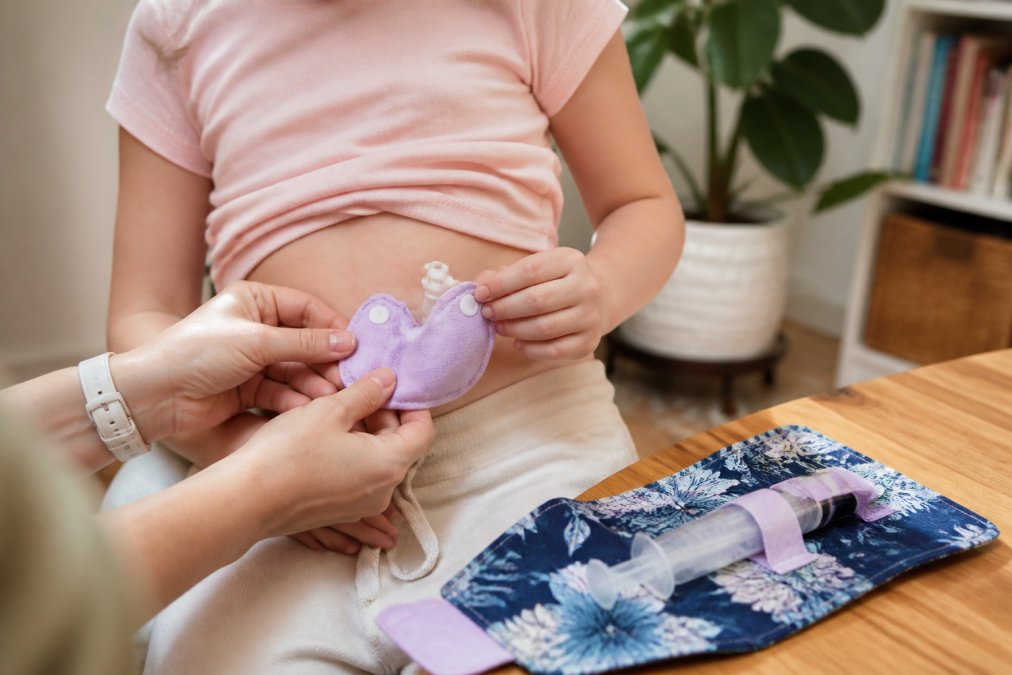
Durable accessories share three traits: washable materials, secure fastenings, and a fit made for your child's specific tube. Special Stitches builds its G-tube and ostomy line around exactly those traits.

How to Build a Cost-Effective Supply Routine
A cost-effective supply routine runs on a simple monthly cycle: audit, reorder, wash, inspect. Families that follow it stop paying for emergency replacements.
Maintenance and Repair Tips to Extend Equipment Life
- Wash reusable fabric items in cool water and air dry where possible; high heat breaks down waterproof linings.
- Fasten snaps and closures before washing so they don't snag other items.
- Store supplies away from direct sunlight and radiators.
- Repair loose seams early. A five-minute stitch beats replacing a $21.00 cover.
- Rotate between two covers so each gets rest between washes.
Garment modification is the other long-term saver. Adding a small pocket slot for port access means a favorite dress or shirt stays in rotation instead of being retired. Special Stitches accepts custom garment modification requests, with timelines and pricing based on the size of the project.
Frequently Asked Questions
What are the available grants for medical equipment in Canada?
Several provincial programs offer pediatric medical equipment grants. Other provinces have similar programs through their health ministries. Some national charities also provide grants for families facing high out-of-pocket expenses. Eligibility usually depends on the child's medical necessity assessment and household income.
How can I find low-cost G-tube and ostomy accessories?
Start by checking whether your provincial health plan covers reusable accessories. Many families find that handmade, reusable items like G-tube button covers and syringe holders cost less over time than disposable alternatives. For example, a reusable button cover priced at $21 can replace repeated purchases of disposable tape and gauze. Local Canadian makers often offer custom sizing at lower prices than imported medical brands.
How does the Assistive Devices Program work for pediatric patients?
The Assistive Devices Program helps cover the cost of medically essential equipment for children with long-term physical disabilities. A healthcare professional completes a clinical assessment to confirm medical necessity. Once approved, the program pays a set portion of the equipment cost directly to the vendor. Parents typically pay the remaining balance. Coverage varies by device type, so confirm eligibility before purchasing.
What provincial programs cover medical supplies for children?
Each province runs its own pediatric medical supply programs. Ontario's Assistive Devices Program is the most well-known, but Alberta, British Columbia, and Manitoba have comparable supports through their health ministries. Some provinces also offer additional grants for low-income families. Contact your provincial health office or your child's care team to find out which programs apply to your situation and what documentation you need.
How do I qualify for medical equipment funding through provincial health plans?
Qualification usually requires a clinical assessment from a licensed healthcare provider confirming the equipment is medically essential. You will also need to meet residency requirements and, in some cases, income thresholds. Applications typically go through the equipment vendor or your child's hospital social worker. Keep copies of all prescriptions and assessments, as missing paperwork is the most common reason for delays in reimbursement.